UNLV Wants your Triatomine bugs!

- UNLV in partnership with UCSF is calling on citizens of the south-west US to contribute to a research program that is focused on triatomine bugs which can transmit the Trypanasoma cruzi parasite to humans and pets.
- Please email us (paravec@unlv.edu) BEFORE sending your bugs to UNLV.
Importance of Triatome Bugs
- Triatomine bugs transmit the parasite Trypanosoma cruzi that causes Chagas disease.
- Chagas disease is a chronic, often severe and sometimes lethal disease that is more commonly transmitted to humans in rural parts of south and central America, but there is a small risk in the USA.
- Triatomine bugs bite animals or humans at night and during the day usually stay hidden in piles of wood, rocks, or in cracks.
- The T. cruzi parasite is transmitted through the bug feces (not directly by being bitten), which can be accidentally rubbed into a bite wound or into the moist tissue around the eyes, nose and mouth.
- Studies in AZ and TX have shown that a high proportion of Triatomine bugs collected are infected with T. cruzi and dogs that spend time outdoors in kennels are particularly at risk of contracting the disease which can cause cardiac failure.
- In the USA transmission of Chagas disease is very low, mainly because the bugs rarely permanently colonize peoples homes and the mechanism of transmission through the bug feces is not efficient.
- We aim to get a better understanding of the Triatomine bugs of the Southwest USA and identify any particular locations where transmission of T. cruzi to humans or pets is a potential risk.
Citizen science-how does it work?

- Around the world people of all ages engage in citizen science—participating in projects in which volunteers and scientists work together to answer real-world questions.
- Much of this work is conducted close to home with guidance from professional scientists.
- UNLV in partnership with UCSF is calling on citizens of the south-west US to contribute to a research program that is focused on triatomine bugs which can transmit the Trypanasoma cruzi parasite to humans and pets.
Triatomine bugs of the USA

- There are 11 species of triatomine bugs that have been reported in the USA.
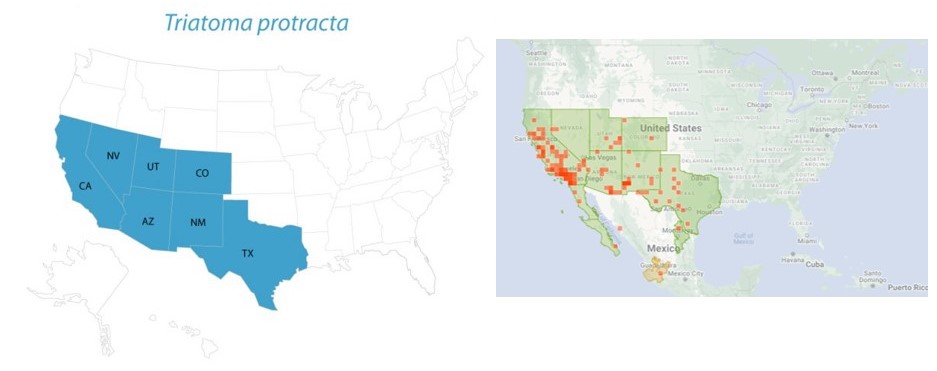
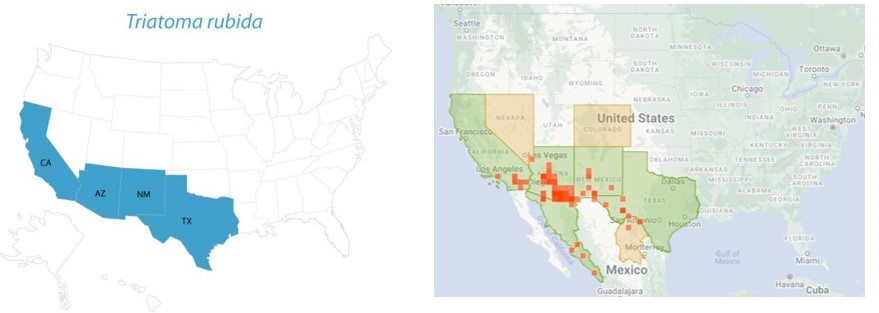
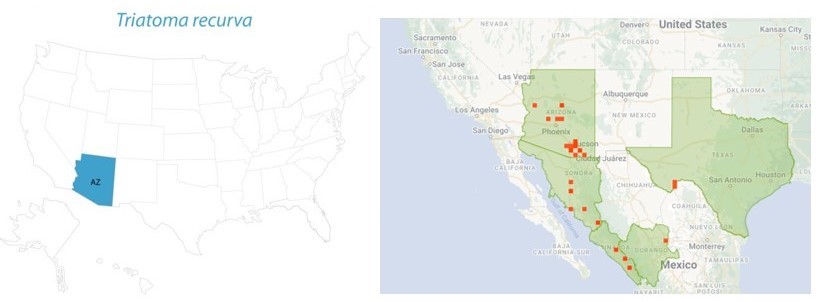
- Of these the 4 most commonly found species in the south-west US are Triatoma protracta, T. rubida, T. recurva and Paratriatoma hirsuta.
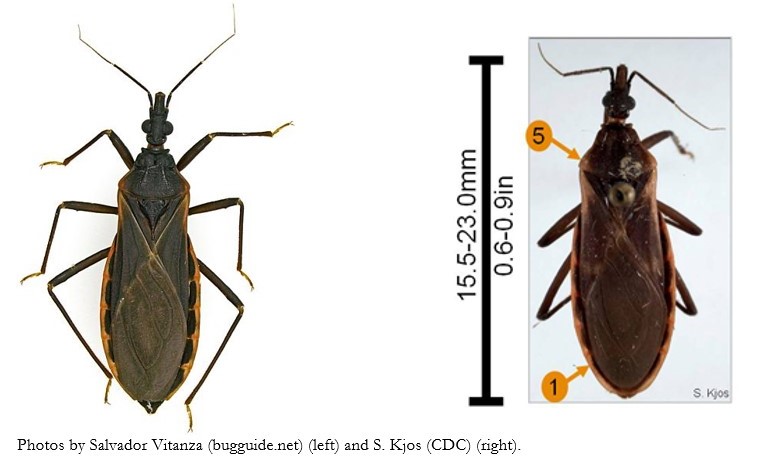
Triatoma protracta (Western Bloodsucking Cone-nose)

Triatoma rubida
Triatoma recurva

Paratriatoma hirsuta
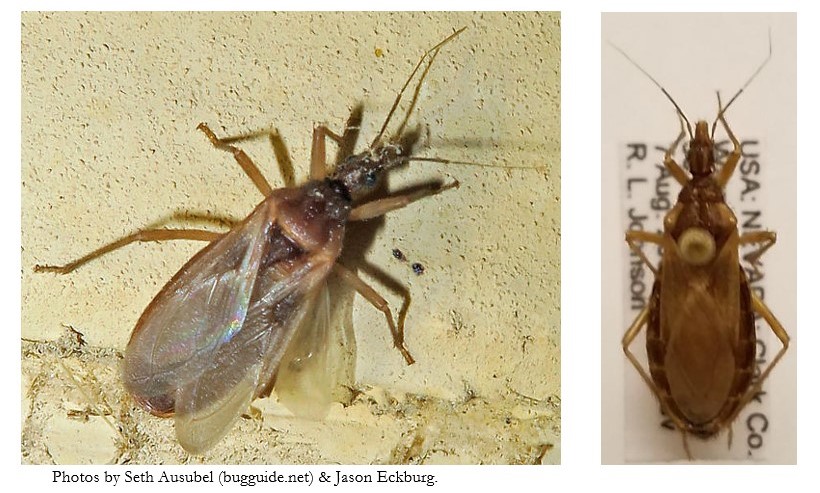

Triatomine Bug Developmental Stages

- They have five immature instars, morphologically similar to adults, except lacking wings.
- Both sexes and all five instars feed on blood of vertebrates, starting with the first instars which take a blood meal as soon as 2–3 days after hatching from the egg.
- All instars are also capable of transmitting T. cruzi.
- The life cycle can be completed in several months in areas where temperatures are warm and when food is readily available.
- Adults live several months, occasionally a year or more (Gorla et al., 2010) and feed throughout their lives.
- Dispersal is achieved both actively by crawling immatures and flying adults (Schofield, 2000). Adults typically disperse by flight during optimal seasons, often just before or during the rainy season.
Project Aims
We are appealing for citizens of the south-west to collect triatomine bugs and send them to our lab for analysis and research. With these samples we aim to:
- Improve distribution map of triatomine bugs in the south-west US.
- Determine prevalence of Trypanosoma cruzi infection by triatomine bug species and location.
- Determine blood-meal source to see what animals the bugs are feeding on.
- Microbiome composition of triatomine bugs.
- Vector and parasite species evolutionary history.
How to collect triatomine bugs

- Triatomine bugs should never be touched with bare hands due to the risk (albeit small) of disease transmission.
- Wear gloves or cover hands with a bag or fabric when handling triatomine bugs.
- Place any collected bugs in a plastic container or Ziploc bag and place in a freezer for 10 minutes until dead.
Information to be recorded for each bug
- Date & time bug collected
- Location of bug when collected (GPS co-ordinates preferred)
- Photo of bug for species identification
- Description of what bug was doing when collected & what the habitat was like in the area.
Key identification features
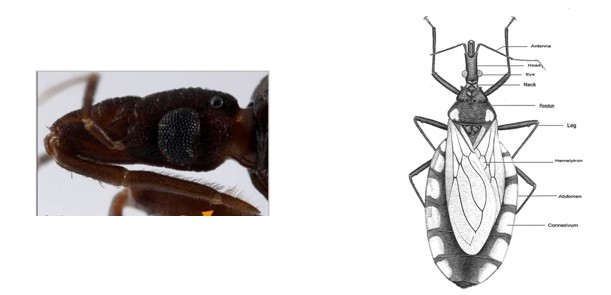
- Elongated cone-nose coming out of head.
- Mouth-parts bent under the head are long and slender.
- Slender legs and antennae.
- All species of kissing bugs found in the United States are mainly black or very dark brown, often with red, orange or yellow ‘stripes’ around the edge of their bodies.
NOT Triatomine bugs
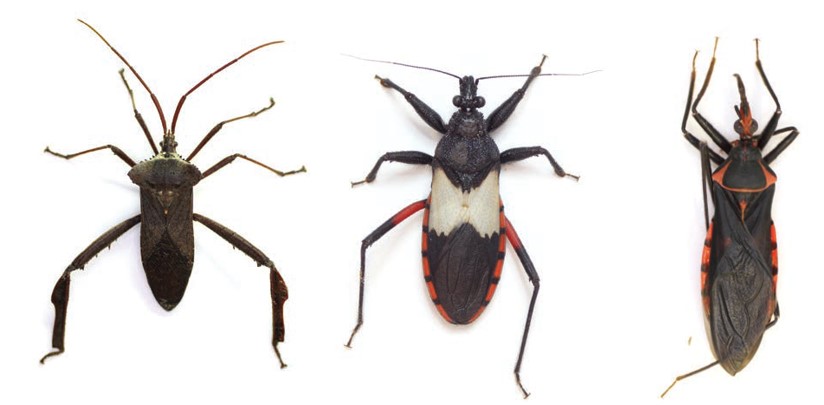
There are many species of bugs that look similar to Triatomine bugs. If in doubt, send us a photo (paravec@unlv.edu)!